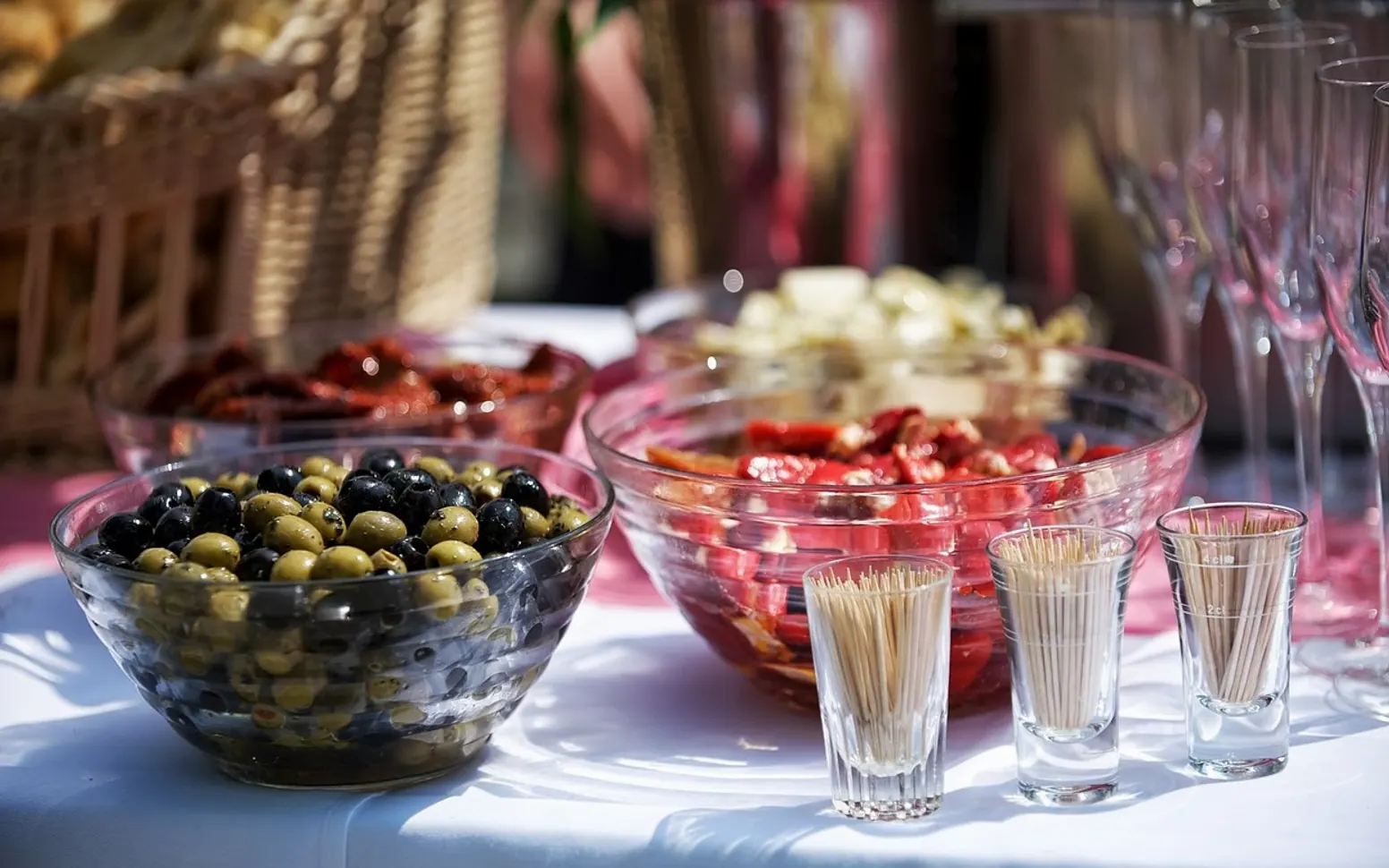
Table 4FoodsSeat 7 / 8
How Much Food Per Person for a Party: Meat, Sides, Drinks and Ice
How much food per person for a party: rules of thumb for meat, sides, appetizers, pizza, dessert, drinks and ice, with a worked example and tips for adjusting.
- Posted
- Length
- 3 minute read
- Sections
- Events
When food is the main meal, a common starting point is about half a pound (around 225 g) of boneless meat per adult, or closer to three-quarters of a pound if it is on the bone, plus roughly half a cup of each side dish. Appetizers, pizza, drinks and ice each have their own rough guide, set out below.
These figures are starting points rather than rules. Appetites vary with age, time of day, the length of the party and how much else is on the table, so read the adjustment notes before heading to the shops.
Quantities at a glance
| Food | Per adult, as a rough guide | Notes |
|---|---|---|
| Boneless meat or fish (main) | About 1/2 lb (225 g) raw | Reduce each one when serving two or more mains |
| Bone-in meat, such as ribs or chicken pieces | About 3/4 lb (340 g) raw | Bones and trimming account for the extra weight |
| Each side dish | About 1/2 cup | With five or more sides, portions shrink further |
| Rice or pasta as a side | About 2 oz (55 g) dry | Closer to 3–4 oz dry if it is the main dish |
| Green salad | About 1 cup, loosely packed | Dressing on the side keeps leftovers usable |
| Bread or rolls | 1–2 pieces | Cheap insurance against running short |
| Appetizers before a meal | 4–6 pieces | Keep the variety small |
| Appetizers as the whole meal | 10–15 pieces over a few hours | Include some filling, starchy bites |
| Pizza | 2–3 slices | Teenagers often eat more; young children 1–2 |
| Dessert | 1–1.5 servings | Smaller pieces work when there are several choices |
Adjusting for your crowd
- Children. Count younger children as roughly half an adult portion; teenagers as a full one or more.
- Time of day. A mid-afternoon gathering between meals needs less than one that runs through dinner time.
- Length. The longer people stay, the more they graze. Plan a second, lighter round for parties that run late.
- Format. Buffets usually need a little more than plated meals, because guests serve themselves and try everything.
- Variety. More dishes means smaller portions of each, but the total amount of food rises slightly.
- Activity. Outdoor games, swimming and dancing all sharpen appetites.
A worked example
Picture a backyard party for 20 adults and 6 young children, running from early afternoon into the evening, with one grilled main, three sides, a salad, bread and dessert.
- Count the children as half portions: 20 + 3 = 23 adult portions.
- Meat: 23 × 1/2 lb comes to about 11.5 lb of boneless meat, or roughly 17 lb if it is mostly bone-in.
- Sides: 23 × 1/2 cup is about 11.5 cups of each side, so three sides at that size.
- Salad: around 23 loosely packed cups of greens.
- Bread: 30 to 45 rolls, leaning high because the party runs through dinner.
- Dessert: 23 to 35 servings.
Because the party covers a full meal and then some, rounding each figure up slightly is sensible. For a short gathering between meals, the same arithmetic with appetizer counts would be the better fit.
Drinks and ice
A widely used rule of thumb is about two drinks per guest in the first hour and one per guest for each hour after that, counting soft drinks, water and any alcohol together. Always have plenty of water and non-alcoholic choices, and if alcohol is served, make sure guests have a safe way home. For a celebratory toast, the pairing ideas in pairing champagne with everyday food help match bottles to the menu.
For ice, plan on roughly 1 to 2 pounds (about 0.5 to 1 kg) per guest. Lean toward the higher end on hot days, for long parties, or when the same ice also chills drinks in coolers and keeps cold dishes cold on the table.
Avoiding waste without running short
Running out is stressful; a fridge full of leftovers is costly. A few habits balance the two:
- Be generous with inexpensive fillers such as bread, rice, potatoes and salad, and precise with the expensive items.
- Hold back part of each dish and bring it out only when needed.
- Have containers ready so guests can take leftovers home.
- Chill leftovers promptly rather than leaving them out while you tidy up.
When money is the main constraint, the ideas in how to feed a crowd on a budget stretch these quantities further. For serving the food once it is ready, see how to set up a buffet table, and if the party is meant to be a secret, how to plan a surprise party covers the timing.
Hand-picked reads
 FoodsAcross the Table: Pairing Champagne With Everyday Food and Special Menus2 minute read
 EventsInfusing Cultural Elements into Your Engagement Ceremony Invitations2 minute read
 EventsA Wedding Photo Booth That Adds Joy, Not Stress: Practical Guidance For Couples2 minute read
 TechWhy Swiss Viewers Are Embracing the Flexibility of IPTV2 minute read
Shopping list maker
Scale it to your own guest list
Count your guests, pick the main food and say how long people will stay. The list on the right applies the per-person guides from this article, children counted as half portions.
Rough starting points, not a promise that nothing runs short: appetites change with age, the time of day and how much else is on the table. Pizza counts assume eight slices a pizza, a common cut. If alcohol is served, keep water and alcohol-free drinks out all the time and make sure everyone has a safe way home.