Table 2EventsSeat 12 / 12
How to Set Up a Buffet Table That Keeps the Line Moving
How to set up a buffet table: the serving order that works, where to put the table, allergy labels, hot and cold zones, and a buffet line setup checklist.
- Posted
- Length
- 4 minute read
- Sections
- Foods
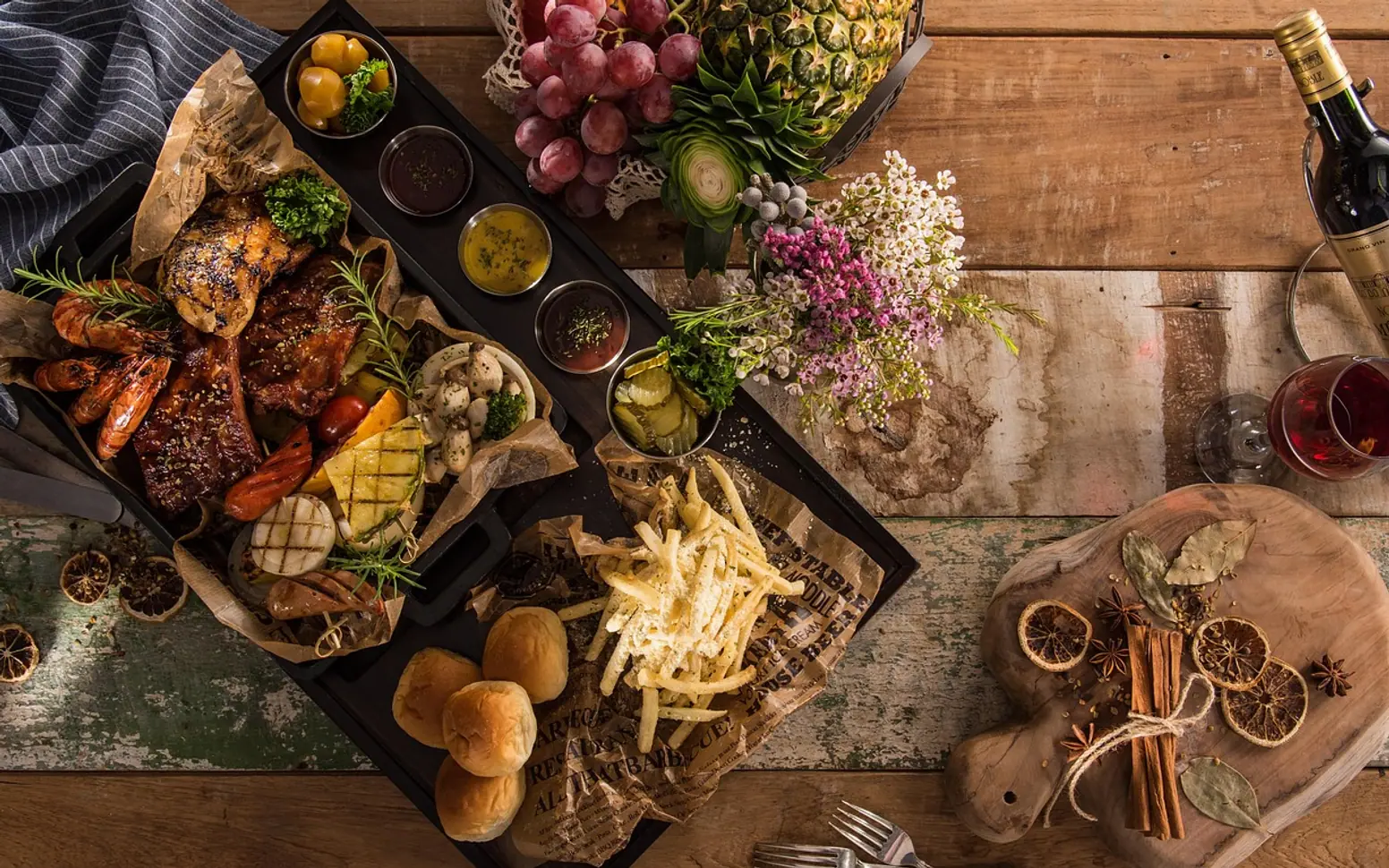
A well-run buffet works like a short road with clear signs: plates at the start, food in a sensible order, cutlery and napkins at the very end, and enough room for people to pass without bumping elbows. Drinks and desserts sit on separate tables so they never hold up the main line.
Getting that order right matters more than how fancy the food is. A modest spread on a well-planned table feels generous; a lavish one in the wrong order turns into a slow queue of guests juggling plates, forks and glasses.
The serving order that works
- Plates. Stack them at the start, with a second stack ready to swap in.
- Salads and cold starters. Light dishes go first so they do not get crowded off the plate.
- Sides and starches. Rice, potatoes, pasta, roasted vegetables and bread-based dishes.
- Main dishes. Placed after the sides, they land on a plate that is already partly full, which naturally keeps portions of the costliest food reasonable.
- Sauces and condiments. Right beside the dish they belong to, not grouped at the end where people forget them.
- Bread and butter. Near the end, since rolls balance easily on a full plate.
- Cutlery and napkins. Last, so hands stay free while serving. Rolling a knife and fork inside each napkin makes them easy to grab.
Keep drinks on their own table or counter, ideally across the room. A drinks station placed beside the food creates a second queue that collides with the first.
Where to put the table
Position matters as much as layout. Pull the table away from the front door, the bathroom route and the kitchen doorway so guests are not waiting in a corridor. Leave space in front for a line to form and, if possible, a gap behind for whoever is topping up dishes.
| Group | Layout | Tip |
|---|---|---|
| A dozen or so guests | One side, table against a wall | A single line is plenty; save floor space for seating |
| A few dozen guests | Freestanding table, served from one side | Leave room behind for refills and hot trays |
| Larger crowds | Double-sided table or two matching stations | Duplicate every dish so both lines move at once |
For bigger family events, such as the ones covered in how to plan a family reunion, two identical stations nearly always beat one long table.
Height, spacing and serving tools
A flat row of dishes looks crowded and hides the ones at the back. Upturned bowls or sturdy boxes under the tablecloth create risers that lift some platters and let others sit low, which saves space and makes everything easier to see.
- Give every dish its own serving spoon or tongs so utensils do not travel between foods.
- Add small saucers as spoon rests to keep the cloth clean.
- Leave a hand's width between dishes so guests can set a plate down for a moment.
- Cut large items, such as roasts, quiches and cakes, into portions before service.
Labels and dietary notes
A small card in front of each dish saves endless "what's in this?" questions. Name the dish and flag common allergens such as nuts, gluten, dairy, eggs and shellfish, plus whether it is vegetarian or vegan. Place allergen-free dishes at the start of the line, or on a separate small table with their own utensils, so they stay clear of crumbs and drips from everything else. Labels help, but guests with serious allergies should still be able to ask the host directly.
Hot zones, cold zones and refills
Plan the table around sockets and ice. Group hot dishes in chafing dishes or slow cookers at one end and cold ones on ice at the other, rather than alternating them. The guide on how to keep food warm for a party compares the equipment options.
When a dish runs low, swap in a fresh one instead of tipping new food on top of old. It looks better and keeps each batch on its own clock. Quantities are easier to judge with the rules of thumb in how much food per person for a party, and menu formats that suit self-service are collected in food and drink selections that delight partygoers.
Buffet table checklist
- Tablecloth, plus clips if the table is outdoors
- Risers to place under the cloth
- Plates, with a spare stack within reach
- Napkins and cutlery, rolled together
- A serving utensil and spoon rest for each dish
- Dish labels with allergen notes
- Warmers, extension leads taped down and fuel cans if needed
- Bowls or trays of ice for cold dishes
- A clearly marked spot for used plates and a bin nearby
Common mistakes
Starting the line with the main dish
Guests fill up on the first thing they see. Mains placed first tend to run out before half the room has been served.
Putting cutlery at the start
People end up holding a fork, a knife and a plate while trying to serve themselves with a ladle. Move everything they carry to the end.
Forgetting where finished plates go
Without a clear spot for used plates, they appear on the buffet itself. A small side table with a bin settles it.
Hand-picked reads
 FoodsAcross the Table: Pairing Champagne With Everyday Food and Special Menus2 minute read
 EventsInfusing Cultural Elements into Your Engagement Ceremony Invitations2 minute read
 EventsA Wedding Photo Booth That Adds Joy, Not Stress: Practical Guidance For Couples2 minute read
 TechWhy Swiss Viewers Are Embracing the Flexibility of IPTV2 minute read