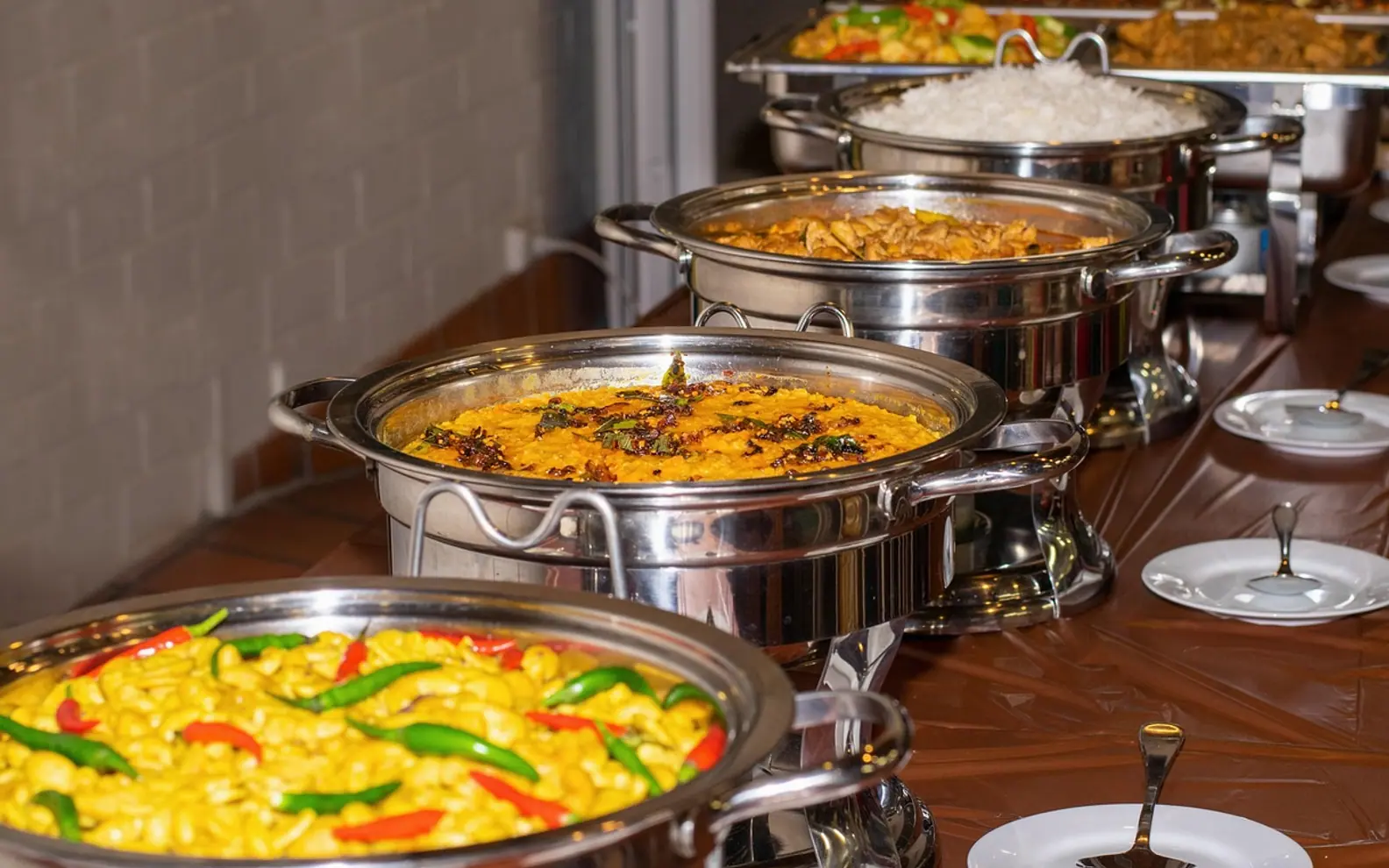
Table 4FoodsSeat 6 / 8
How to Keep Food Warm for a Party (and Cold Dishes Cold)
How to keep food warm for a party with a low oven, slow cookers, chafing dishes or a cooler used as a hot box, plus easy ways to keep salads and dips cold.
- Posted
- Length
- 4 minute read
- Sections
- Events
The easiest ways to keep food warm for a party are a low oven, slow cookers set to warm, chafing dishes or an electric warming tray, and, for anything that has to travel, a cooler lined with towels and used as a "hot box". Whatever the method, the target is the same: hot food should stay at 140°F (60°C) or above until it is eaten.
The right choice depends on how many dishes you have, how long the gathering lasts and whether you are serving at home or carrying food somewhere else. Most hosts end up combining two or three of the options below.
Start with timing, not equipment
The warmest food is food that finishes cooking close to when people eat. Work backward from the moment you want to serve and stagger the dishes so the ones that suffer most from waiting come out last.
Some dishes hold beautifully: chili, curries, stews, braised or pulled meats, meatballs in sauce, baked pasta, mashed potatoes enriched with butter or cream, and gravy kept on a low flame. Others fade fast, including anything fried, crisp roast potatoes, steamed greens and pasta in a thin sauce. Build the warm part of the menu mainly from the first group and the hardest work disappears.
Methods compared
| Method | Best for | Watch out for |
|---|---|---|
| Oven on its lowest setting, around 200°F (95°C) | Casseroles, roasts resting under foil, bread rolls | Food dries out if left uncovered; one oven fills up quickly |
| Slow cooker on "warm" | Chili, meatballs, pulled meat, soup, mulled drinks | Needs a socket; the warm setting holds heat but is too gentle to reheat cold food safely |
| Chafing dishes | Trays of pasta, rice, roasted vegetables on a buffet | Fuel cans need supervision and the water pan must not run dry |
| Electric warming tray | Several small dishes at once | Heats from below only, so stir thick dishes now and then |
| Insulated cooler as a hot box | Foil trays carried to a picnic, reunion or game | Never share it with cold food; check temperatures on arrival |
| Vacuum flask | Soup, gravy, hot drinks | Pre-heat it with boiling water or it steals warmth from the food |
How to turn a cooler into a hot box
- Fill the empty cooler with hot tap water, close the lid and leave it for ten minutes or so.
- Pour the water out and dry the inside.
- Line the base with a thick towel.
- Wrap each hot dish in foil, then in a second towel, and pack them in snugly.
- Fill any gaps with more towels so there is little air to cool down.
- Keep the lid closed until serving and check the food with a thermometer when you arrive.
A hot box slows heat loss rather than adding heat, so it buys time but not unlimited time. If the food has dropped below 140°F by the time it is served, the usual two-hour room-temperature clock applies; the guide on how long food can sit out explains how that works.
Holding warm is not the same as reheating
Warming equipment is designed to keep hot food hot. It is not built to bring a dish up from fridge temperature, and doing so slowly can leave food in the danger zone for too long. Reheat make-ahead dishes on the stove or in the oven until they are steaming throughout, around 165°F (74°C) in the center, then move them to the slow cooker, chafing dish or warming tray.
Keeping cold dishes cold
The other half of the job is often forgotten. Salads, dips, cut fruit and anything with mayonnaise or dairy need to stay at 40°F (4°C) or below. A few simple setups do the trick:
- Set serving bowls inside larger bowls or trays filled with ice, and replace the ice as it melts.
- Chill platters and bowls in the fridge before plating.
- Bring cold dishes out in small rounds and keep the rest refrigerated.
- Outdoors, keep cold dishes in the shade and the cooler closed between servings.
Hot and cold dishes are easier to manage when they sit in separate zones of the table. The guide on how to set up a buffet table shows how to plan those zones around sockets and ice.
Small mistakes that cost heat or texture
- Sealing fried food under a lid. Trapped steam turns crisp coatings soft. Leave a gap or use a loose foil tent.
- Overcrowding the oven. Packed shelves block airflow and dishes warm unevenly.
- Skipping the thermometer. A cheap probe thermometer is the only reliable way to know a dish is still above 140°F.
- Running cables across walkways. Place warmers near sockets and tape down any extension leads.
- Forgetting to stir. Gravy, cheese sauces and thick stews form a skin or catch on the bottom if left alone.
Quick answers
How long can food stay in a warm oven?
As long as it stays at 140°F or above it is out of the danger zone, but texture suffers the longer it waits. Most dishes are at their best when served within an hour or two, so time the cooking accordingly.
Does wrapping a dish in foil keep it warm?
Foil slows heat loss a little and helps inside a hot box, but on its own it will not hold a dish at a safe temperature for long.
What works when there is no power at all?
Chafing dishes with fuel cans, pre-heated flasks and a well-packed hot box all work without electricity. For a seated meal at home, the timing advice in how to host a dinner party without the stress reduces how long anything needs to be held at all.
Hand-picked reads
 FoodsAcross the Table: Pairing Champagne With Everyday Food and Special Menus2 minute read
 EventsInfusing Cultural Elements into Your Engagement Ceremony Invitations2 minute read
 EventsA Wedding Photo Booth That Adds Joy, Not Stress: Practical Guidance For Couples2 minute read
 TechWhy Swiss Viewers Are Embracing the Flexibility of IPTV2 minute read