Table 6SportsSeat 4 / 4
Watching Curling on TV: A Beginner's Guide
New to curling on TV? Learn how ends, stones, the house and the hammer work, what skips and sweepers do, and how to read the scoreboard with ease.
- Posted
- Length
- 5 minute read
Curling makes sense on television once you know four things: a game is split into ends, each team throws eight stones per end, only stones closest to the centre of the target score, and the team holding the last stone (the hammer) has the advantage. Everything else, from the shouting to the frantic sweeping, follows from those basics. With them in mind, a broadcast that looks slow at first turns into a game of chess played on ice.
The sheet, the stones and the house
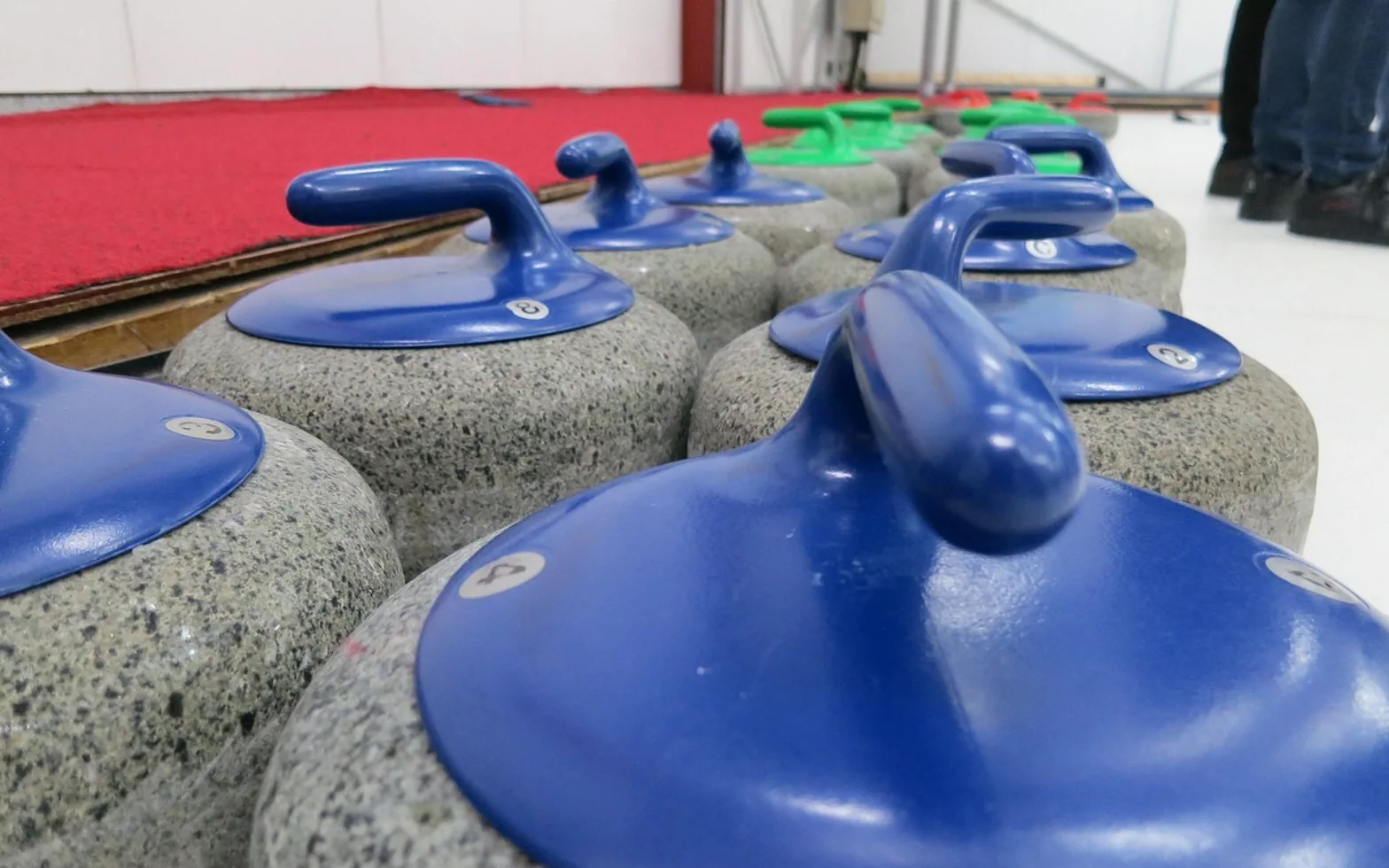
A curling sheet is a long, narrow strip of pebbled ice. At each end sits a set of painted rings called the house, with a small centre circle known as the button. Players slide granite stones from one end toward the house at the other, releasing them before a line called the hog line. A stone that fails to cross the far hog line is removed from play, and so is one that slides out past the back line.
The ice is sprayed with fine water droplets that freeze into tiny bumps. That pebble is what lets a stone "curl", drifting left or right depending on the spin the thrower puts on the handle. Much of the skill lies in judging how far a stone will drift on a given sheet.
How an end works
Each team has four players, and each player throws two stones per end, alternating with the opponent. After all sixteen stones have been delivered, the end is scored. Only one team can score in an end: it receives one point for every stone that is in the house and closer to the button than the opponent's nearest stone. If no stone is in the house, the end is "blanked" and nobody scores.
Games at the top level are usually played over ten ends, with an extra end added if the score is tied. Teams may concede once a comeback is out of reach, so some broadcasts end early with a handshake.
Why the hammer matters so much
The last stone of an end is called the hammer, and the team holding it can react to everything that came before. A team with the hammer usually wants to score two or more points. If it can only manage one, it may choose to blank the end instead, keeping the hammer for the next one. When a team scores, the hammer passes to the opponent. Watching who has it, and what they plan to do with it, is the single most useful habit for a new viewer.
Who does what on the ice
- The skip stands in the house, reads the ice, calls each shot and holds the broom as a target. The skip usually throws the last two stones of the end.
- The vice (or third) helps plan strategy and holds the broom while the skip throws.
- The lead and second throw the early stones, setting up guards and clearing obstacles, then sweep for teammates.
- The sweepers follow each stone down the sheet. Brushing the ice in front of a stone helps it travel farther and curl less, so they can steer a throw that has come out slightly heavy or light.
Calls of "hurry" and "hard" on a broadcast are instructions to the sweepers; "off" tells them to lift their brooms.
Reading the scoreboard
TV graphics usually show a simple line score: the teams, a small marker beside the team holding the hammer, and points per end. Some arenas use a traditional board where the middle row shows points totals and each team's end number hangs beside the score it has reached. Just remember that the middle numbers are the running score.
| Term | What it means on screen |
|---|---|
| Guard | A stone left in front of the house to protect other stones |
| Draw | A gentle throw meant to stop in a chosen spot |
| Takeout | A firmer throw that knocks an opposing stone out of play |
| Freeze | A stone that stops touching another one, making it hard to remove |
| Steal | Scoring in an end when the other team held the hammer |
Why patience pays off
Curling strategy is built around small advantages that grow over several ends. A team leading late in the game often plays plenty of takeouts to keep the house clear, while a team behind leaves guards in front and tries to build a crowd of stones. A single misjudged weight can turn a promising end into a steal for the opponent. That slow build is what gives the final throws their tension.
What should a first-time viewer watch for in each end?
Note who has the hammer, count the stones in the house before the last few throws, and listen for the skip's call. If you can predict whether the final stone will be a draw or a takeout, you are already following the game the way regular fans do.
A winter tradition on Canadian screens
Curling has long been a fixture of winter in Canada. Small-town clubs, school leagues and rinks in nearly every province gave the sport a broad base of players, and televised championships turned it into something families switch on during cold weekends. The pace suits a living room, with time to talk between shots and still catch the decisive throw. Many households now follow those championships through a mix of cable, apps and IPTV Canada options that carry live Canadian channels, so it is worth checking in advance where the draws you care about will air. If you are weighing a change of setup, our look at how viewers are moving from cable to internet television covers the practical side.
How do you turn the national championships into a weekend with friends?
Treat it like a slow-moving party. Print a simple line-score sheet so guests can mark each end, put one curling-savvy friend in charge of explaining the hammer, and run a small prediction game for every final stone. Food that sits well over several hours works best; our guide on keeping party food warm (and cold dishes cold) helps with that.
Once the basics click, follow the hammer, watch the sweepers and give the strategy a few ends to unfold. The final stone of a close game will feel every bit as tense as a last-minute goal.
Hand-picked reads
 FoodsAcross the Table: Pairing Champagne With Everyday Food and Special Menus2 minute read
 EventsInfusing Cultural Elements into Your Engagement Ceremony Invitations2 minute read
 EventsA Wedding Photo Booth That Adds Joy, Not Stress: Practical Guidance For Couples2 minute read
 TechWhy Swiss Viewers Are Embracing the Flexibility of IPTV2 minute read